The Missing Screw Is the New Villain: A Modest Pitch for Furniture-Build Dating TV
Every dating show has the same fake emergency. Someone gets a date card. Someone else cries near a pool. A helicopter idles dramatically in the background while two people who met nine days ago discuss whether they’re “open to love.” It’s fine television. It is also, emotionally speaking, a controlled environment.
Real compatibility rarely announces itself under string lights. It shows up in the parking lot of a home goods store, when one person insists the box will fit in the trunk and the other person is already reading the return policy. That’s the energy Love6 TV should chase next: a flat-pack furniture challenge before the next rose ceremony.
The case for putting particle board between two people
A fancy date tests whether you can be charming for four hours. A furniture build tests whether you can be patient for ninety minutes while someone else holds the instructions upside down. Those are different skills. Only one of them predicts whether you’ll survive a shared lease.
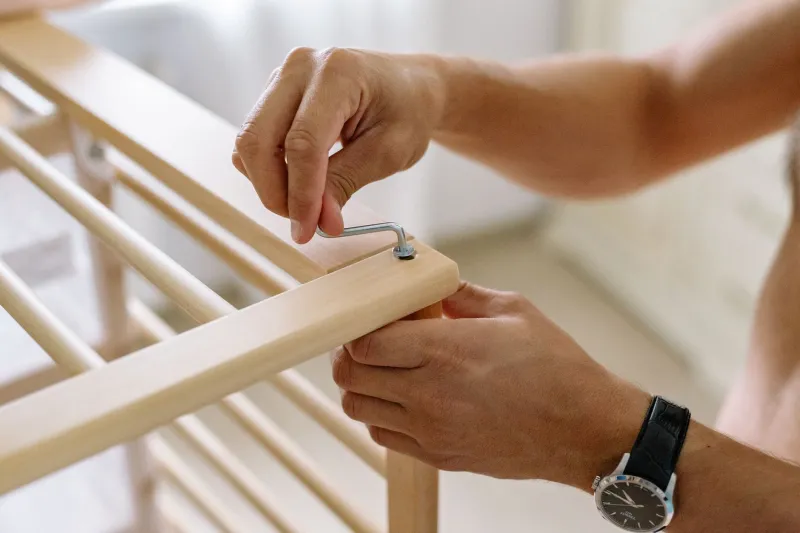
Dating shows love to manufacture conflict with bombshells and rumor mill episodes. But the most revealing conflict is usually smaller and uglier: a missing screw, a mislabeled panel, a step that says “attach B to C” when B and C appear to be the same piece of wood. You learn fast who takes charge, who checks out, who gets snippy when the Allen wrench strips, and who says “no worries, we’ll figure it out” like a person who has never once figured anything out.
That’s not cynicism. It’s just better casting. Love6 TV viewers don’t need another helicopter. We need a couple staring at a half-built bookshelf at 9:47 p.m., wondering whether this is a metaphor or just bad directions.
The rubric writes itself
This doesn’t have to be chaos for chaos’s sake. A dating-show challenge works best when it has clear stakes and extremely petty scoring. Imagine the producers handing over a box, a timer, and one rule: finish before the rose ceremony, or at least finish arguing before it.
Here’s a practical scoring rubric we’d pitch to any Love6 TV development meeting:
- Instruction literacy (10 points). Who opens the manual first? Who claims they “don’t need it” and then puts the shelf on backward? Extra credit for reading the safety warnings out loud in a dramatic voice.
- Parts inventory (10 points). One partner counts screws. The other partner says, “We definitely have enough.” One of them is right. The other one is about to make a Target run.
- Panic management (15 points). When a piece is missing, does the couple blame each other, blame the manufacturer, blame the universe, or calmly call customer service? Calmly calling customer service is worth more than any candlelit dinner.
- Tone repair (20 points). This is the big one. Who apologizes first after a sharp comment? Who de-escalates with a joke that actually lands? Who says “I’m not mad at you, I’m mad at the diagram” and means it?
- Final assembly (15 points). Does the thing stand upright? Does it wobble? Does it look like a bookshelf or a modern art piece about regret? A slight wobble is acceptable. A full collapse is a storyline.
- Post-build debrief (10 points). Can they laugh about it afterward? Can they admit what they’d do differently? This is where the actual relationship evidence lives.
That’s 80 points. The remaining 20 are for vibes, which is the most scientific part of any reality TV rubric.
Why viewers would root harder for a bookshelf
A helicopter date is aspirational. A furniture build is relatable. Most Love6 TV viewers have not been whisked over a coastline, but plenty of us have argued about which way the cam bolt goes. That shared memory is why the bookshelf couple would hit harder. When they survive the missing screw, we feel like we survived it with them. When they apologize after a dumb comment about the instructions, we recognize the move. It’s not glamorous. It’s just true.
There’s also a practical TV reason to do it. Furniture builds are naturally episodic. You get a beginning, a middle, and a crisis. You get close-ups of confused faces. You get the moment someone finds the screw under the coffee table and the whole room cheers. You get a finale object that either stands or doesn’t. That’s more narrative structure than most dinner dates can offer.
And yes, the product placement potential is obviously there. But the emotional pitch is stronger: love isn’t proven by surviving a helicopter. It’s proven by surviving a step labeled “insert dowel into panel D” without turning panel D into a personality flaw.
The rose ceremony can wait
Dating shows keep looking for bigger swings: bigger dates, bigger villains, bigger finales. Sometimes the better move is smaller. Hand two people a box, a deadline, and a cheap wrench. See who reads first, who listens, who panics, and who says sorry before the last screw is in.
If Love6 TV wants a challenge that actually tells us something, skip the candlelit dinner. Give us the build. The missing screw is the new villain, and honestly, it’s more honest than most of the ones we’ve already met.